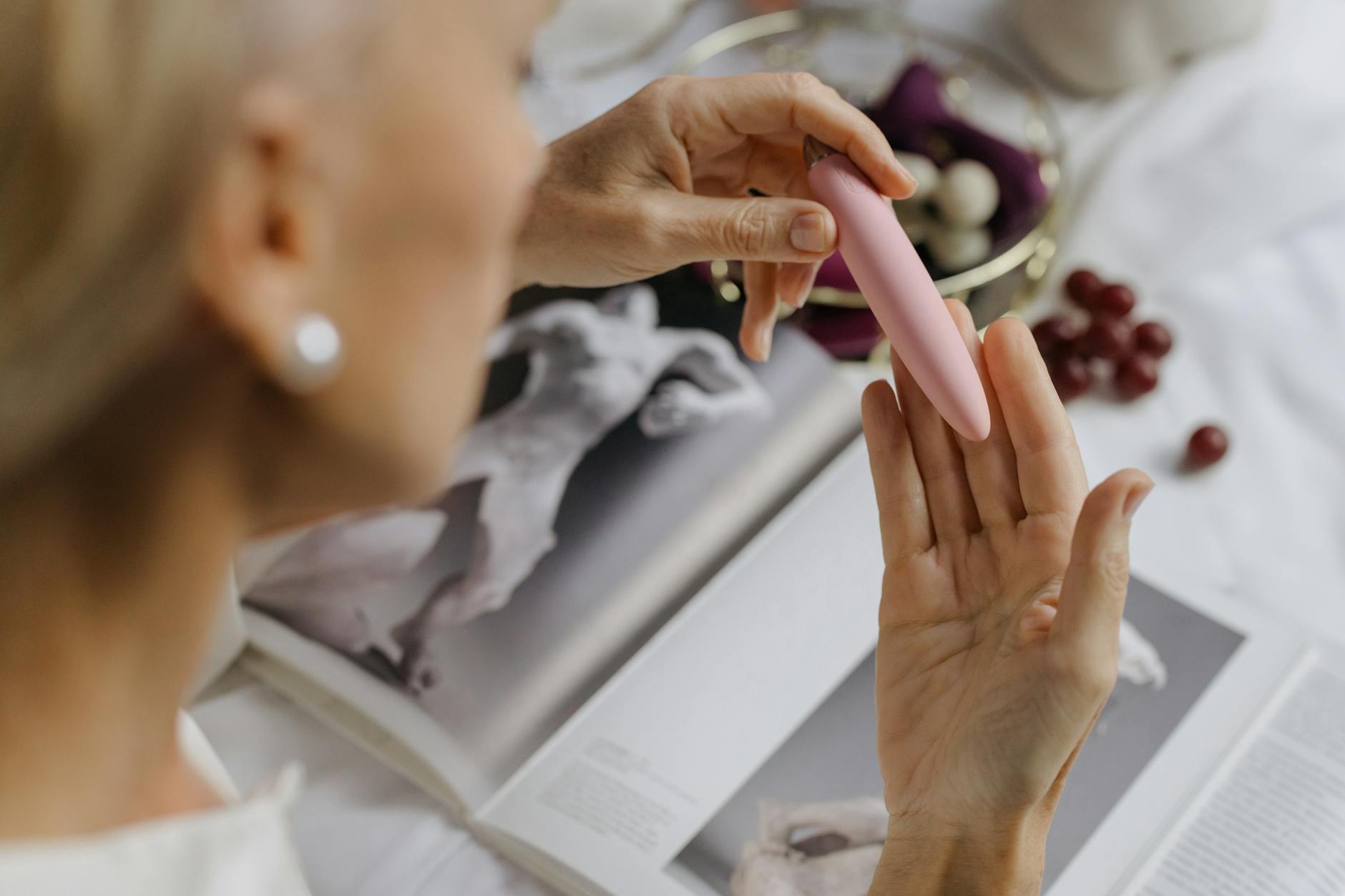
How to Use Lemon Vibrators When Anxiety Interferes With Arousal
Anxiety shuts down pleasure before you even notice it's happening. Here's the neuroscience behind why, and how the right tool can rewire your nervous system back to sensation.
Here's what happens: your brain is halfway through dinner, or a work deadline, or your mother's comment from last week. Then your partner touches you, or you settle in for solo time, and your body doesn't respond. Not because you don't want pleasure. Because your nervous system is locked in fight-or-flight, and arousal requires the exact opposite state.
This is not a character flaw. It's neurobiology. Your amygdala is doing its job. The problem is that anxiety doesn't just dim arousal. It creates a feedback loop: you notice you're not aroused, you get anxious about not being aroused, and now your nervous system is even more activated. The window for pleasure closes entirely.
The good news: clitoral vibrators like the Lem can actually interrupt that loop if you use them intentionally.
When you're anxious, your sympathetic nervous system (the accelerator) is pressed down. Blood vessels constrict. Your clitoris, which depends on blood flow to become engorged and sensitive, essentially goes offline. The tissues thin, lubrication slows, and sensation flattens.
Meanwhile, your brain is busy. Cortisol and adrenaline are flooding your system. These aren't the neurochemicals of pleasure. Arousal needs dopamine and oxytocin, which require a calm, parasympathetic state to activate.
This is why forcing yourself to "just get in the mood" doesn't work. You can't think your way out of your nervous system's stress response.
Here's the thing about external stimulation: it gives your nervous system something concrete to focus on instead of the anxiety spiral.
When you use a lemon vibrator, you're not waiting for arousal to spontaneously happen. You're creating a direct, measurable sensation that your body can't ignore. The air-suction technology of the Lem, specifically, stimulates the clitoris in a way that feels distinctly different from manual touch. It's concentrated, rhythmic, and consistent in a way that actually helps calm an activated nervous system.
That consistency is key. When your brain is anxious, it needs repetition and predictability to downshift. A vibrator provides exactly that: the same pattern, the same frequency, the same sensation, over and over. Your nervous system gradually recognizes: "This is safe. This is not a threat." Slowly, the amygdala releases its grip.
Many of my clients report that the first few minutes with a lemon sexual toy feel mechanical, almost clinical. Then something shifts. The mind quiets. Blood flow returns. Sensation blooms. That's not magic. That's your parasympathetic nervous system coming back online.
If anxiety is your baseline, you can't skip the nervous system prep. Sex doesn't happen in your genitals first. It happens in your vagus nerve, your breath, your ability to be present.
Before you touch a Lem vibrator, spend 10 minutes lowering your activation:
Breathing: Box breathing works remarkably well. Inhale for 4, hold for 4, exhale for 4, hold for 4. Do this for five minutes. This directly signals your vagus nerve that you're safe.
Body scan: Start at your scalp and consciously release tension as you move down through your shoulders, chest, belly, and legs. You're not doing this for relaxation. You're doing it to notice where you're holding anxiety so you can stop.
Remove external threats: Phone on silent. Close the browser tabs with work emails. Lock the door. Your nervous system needs actual safety, not the promise of privacy.
Temperature: A warm bath or shower before self-pleasure genuinely helps. Warmth activates the parasympathetic nervous system more efficiently than cold does.
Once your resting heart rate has dropped and you can feel your breath moving through your belly, you're ready.
Start on the lowest setting. Seriously. Your goal is not orgasm. Your goal is to establish a baseline of calm sensation.
Place the Lem against your clitoris and let it sit there for 30-60 seconds before you activate the suction. Let your nervous system recognize the contact. This is your amygdala learning: "This object is here, and I'm okay."
Then activate the lowest pattern. Many people with anxiety find that constant, moderate suction (not pulsing) works better than varied patterns. Unpredictability can trigger anxiety. Boring, steady stimulation is your friend.
Keep your eyes open or semi-open. Closing your eyes and going "inside" can intensify intrusive thoughts for anxious brains. Many of my clients find that looking at their hands, or a neutral point in the room, helps anchor them to the present moment.
Your first session is not about reaching orgasm. It's about proving to your nervous system: "This sensation is safe, and I can stay present with it." If you reach orgasm, wonderful. If you reach a place where your anxiety has quieted and you feel even a small amount of pleasure, that's success.
Repeat this weekly until your nervous system learns the pattern.
If you're in a relationship and anxiety is affecting your shared intimacy, here's what matters most: your partner needs to understand that this isn't about them, and it isn't about desire.
Many partners, when their partner's arousal flattens, interpret it as rejection. It's not. It's your nervous system doing its job too well. The most loving thing your partner can do is step back from penetrative sex and focus on co-regulating.
Using a lemon clitoral vibrator together can actually help. Let your partner hold the Lem while you focus on breath. Or you guide the Lem while they provide other sensation: a hand on your chest, words, presence. This removes the pressure of "performing" arousal and replaces it with something your nervous system can genuinely relax into.
If anxiety is consistently blocking arousal across weeks or months, that's worth discussing with a therapist or a doctor.
Some antidepressants and anti-anxiety medications actually improve sexual response once you find the right one. Others can dampen it. If you're on medication, a conversation with your prescriber might unlock something you didn't know was possible.
A therapist trained in somatic approaches (focusing on how trauma and anxiety live in the body) can offer techniques that clitoral vibrators alone can't. EMDR, sensorimotor psychotherapy, and nervous system-focused CBT all have solid research behind them for anxiety-related sexual difficulties.
You don't have to white-knuckle your way through this alone.
It's not placebo. The repetitive, focused stimulation of a clitoral vibrator activates the parasympathetic nervous system by giving your brain something predictable to focus on. However, a vibrator isn't a substitute for actual anxiety treatment if your anxiety is clinical or pervasive. It's a tool that works best alongside breathing, therapy, or medication if you need it.
It varies, but many people see shifts in 4-8 weeks of consistent, low-pressure exploration. Your nervous system learns through repetition. Once weekly tends to be the minimum for actual rewiring. If you're doing it sporadically, you're not giving your amygdala enough data to shift its threat assessment.
Completely normal, especially if anxiety has been blocking arousal for months or years. Dissociation and anxiety often travel together. Focus on sensation first: the vibration, the warmth, the texture. Don't push toward pleasure. Just notice what your body can feel. Pleasure will follow once disconnection softens.
Yes. Some medications (particularly SSRIs) can affect sexual response, but a vibrator's concentrated stimulation often works around that. If you're noticing numbness, bring it up with your doctor. There might be a timing adjustment or a different medication that works for you. A Lem clitoral vibrator works better than nothing, but it shouldn't be your only solution if medication is genuinely blunting sensation.
That's your signal to talk with a therapist. Anxiety that persists despite nervous system regulation tools might point to deeper patterns: past trauma, relationship dynamics, or clinical anxiety that needs professional support. A vibrator is a tool. It's not a treatment for anxiety disorder.
If you're in a committed relationship, yes. Transparency builds trust and removes shame. Your partner might actually want to support this. Many partners feel relieved when they realize their partner's arousal difficulties aren't about attraction. It reframes the whole dynamic from "you're not interested in me" to "let's find what works for your nervous system."
For years, conversations about pleasure and vibrators focused entirely on sensation: intensity, patterns, materials. But the real frontier is nervous system regulation. If your amygdala is hijacking your arousal, no vibrator in the world will bypass that entirely.
What works is treating your body as the intelligent system it is. Calm your nervous system first. Then give it a tool like the Lem that provides predictable, focused stimulation. Then stay patient while your brain learns that pleasure is safe.
Your anxiety isn't a flaw. It's just your nervous system doing its job too aggressively. The job of tools, therapy, and time is to teach it that safety and arousal can coexist. They absolutely can.
If this resonates with you, consider reaching out to a therapist who specializes in sexual wellness or somatic therapy. You deserve pleasure without the constant backdrop of anxiety. For more guidance on rebuilding intimacy and connection in your relationship, feel free to contact The Lemon Sexual Toys for resources and support.
Polaris, E. (2011). Nervous system regulation and sexual response. The Journal of Sexual Medicine.
Porges, S. W. (2011). The Polyvagal Theory: Neurophysiological Foundations of Emotions, Attachment, Communication, and Self-regulation. W.W. Norton & Company.
van der Kolk, B. (2014). The Body Keeps the Score: Brain, Mind, and Body in the Healing of Trauma. Viking.