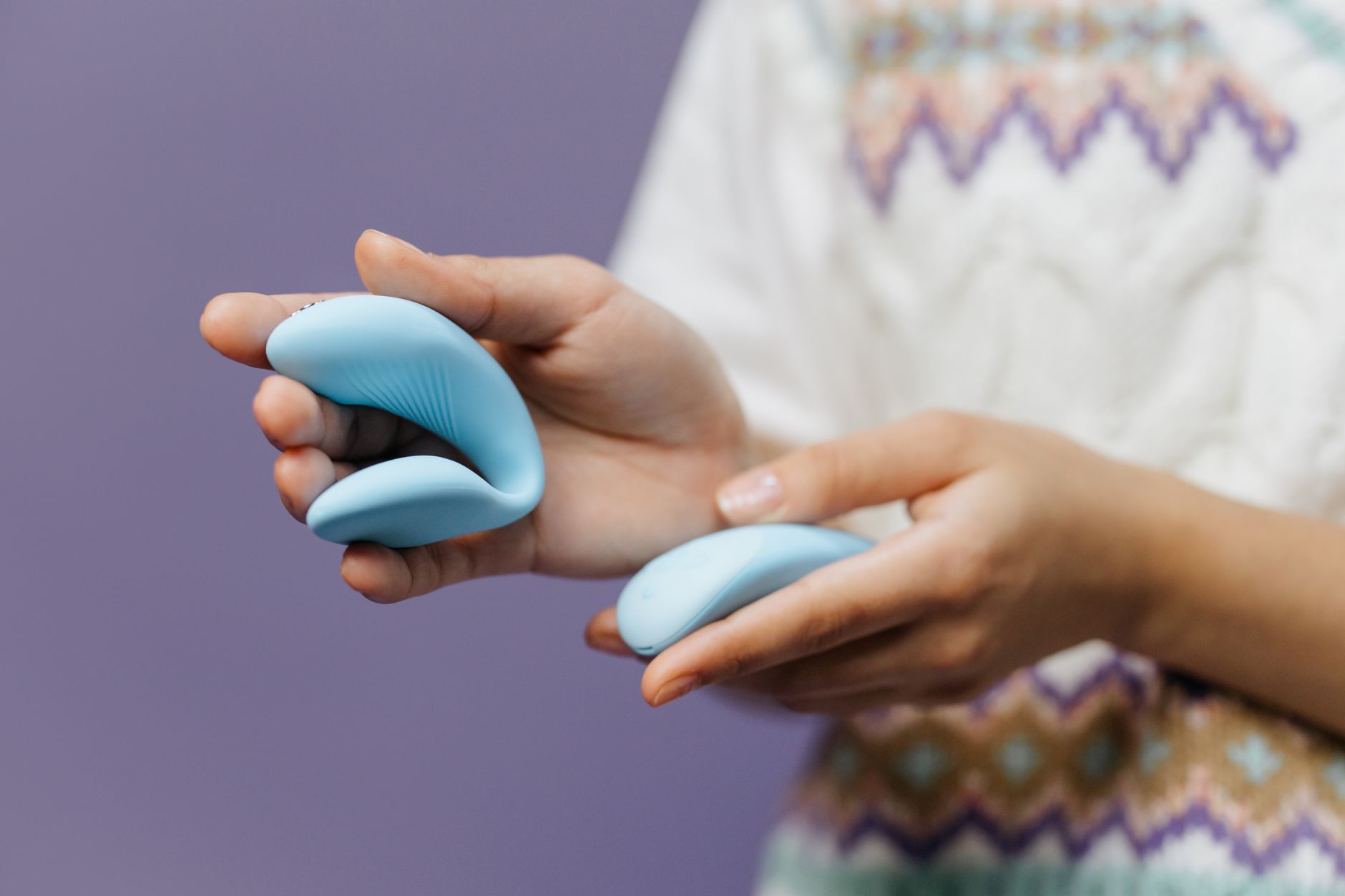
You used to get turned on in five minutes. Now it takes twenty. Or thirty. Or you're not sure it's even happening at all until someone touches you the right way. This isn't laziness. This isn't a sign your body's failing you. This is just how arousal works for a lot of people as they age, manage stress, shift through medication changes, or navigate relationship evolution.
Arousal isn't a light switch. It's a dimmer, and the dial moves slower as you get older, more tired, or more stressed. Here's what's actually changing in your body.
Blood flow to genital tissue takes longer to happen. Your nervous system needs more time to downshift from alert mode into parasympathetic mode—the part of your brain that says "yes, this is safe and pleasurable." Estrogen fluctuations, whether from age, hormonal birth control, or the menstrual cycle, change how quickly tissues swell and lubricate. If you're in a long-term relationship, the novelty itself has dimmed, which means your brain isn't flooding with dopamine the way it used to.
None of this means desire has gone anywhere. You still want sex. You just need a longer runway to get there.
Most advice assumes you want to speed yourself up. "Try kegels." "Read erotica beforehand." "Take a bath." These things have their place, but they're solving the wrong problem. They're trying to get you to arousal faster instead of working with your actual timeline.
The real friction comes from mismatch. You need thirty minutes to warm up. Your partner needs five. You finish in forty. Suddenly sex feels like a chore nobody's enjoying. Or you're alone and you spend so much time trying to get wet that you give up before you even get there.
A good clitoral vibrator does something traditional foreplay can't: it provides consistent, targeted stimulation while your body catches up. You don't have to do anything. You don't have to perform arousal or fake enthusiasm while your nervous system is still in traffic.
Lemon vibrators, specifically, use suction and pulsing patterns that work with slower arousal rather than against it. You can start on a low pattern—pattern 1 or 2—and just let the sensation work while you breathe, relax, and give your body permission to take its time. There's no pressure to "be ready" by a certain point.
The clitoral nerve has roughly 8,000 nerve endings. A lemon clitoral vibrator stimulates those nerves without requiring you to already be aroused. This is the key difference: you're not waiting for arousal to arrive so you can enjoy pleasure. You're using pleasure to help arousal arrive.
Most people find that within five to ten minutes of consistent stimulation, the rest of the cascade starts happening: lubrication increases, tissues begin to swell, breathing changes, focus narrows. Your body catches up once it knows it's safe and stimulated.
Start with zero expectation. Don't put the toy on your clitoris thinking "this better work in five minutes." Put it on and think "I'm going to spend the next twenty minutes exploring what this feels like." Pressure kills arousal. Release builds it.
Choose the right pattern. Lemon vibrators come with multiple settings. Begin on the lowest intensity, the pattern that feels like a gentle suggestion rather than a demand. Many people get stuck on high intensity because they think more stimulation equals faster results. The opposite is usually true. Start low, stay there for at least five minutes, then gradually move up if you want to.
Give yourself at least fifteen minutes. This isn't the time for efficiency. Your arousal isn't broken; it just needs space. Fifteen minutes of consistent, gentle stimulation while you're relaxed and breathing deeply often produces more pleasure than twenty years of rushed five-minute sessions ever did.
Layer in other sensations. If you're with a partner, they can touch you elsewhere while you use the vibrator on your clitoris. The combination of sensations—penetration, manual touch, kissing—helps your nervous system receive the message that this is safe and worth paying attention to. If you're alone, try being in a warm bath, or light a candle, or put on music that makes you feel something.
Notice the difference between arousal and orgasm. Slow arousal doesn't mean slow orgasm. Once your body finally wakes up, you may find orgasms come faster, feel stronger, or last longer than you remember. You're not trying to speed up the whole process. You're just giving the beginning permission to take time.
If you're in a relationship, this is worth talking about before you're in bed. "I'm finding I need more time to get into it these days. I'm not less interested—I just have a different timeline now. I want to use a lemon vibrator to help get there, and then we can go from there." That sentence removes the shame, the performance, and the guessing game.
Many partners worry that introducing a toy means they're not doing it right. Setting the expectation beforehand—"This is about my timeline, not your skill"—changes everything. You're not replacing them. You're just using a tool that lets you show up as yourself, without rushing.
People often tell me the same thing after a few weeks of accepting their slower timeline: they actually enjoy sex more. Not despite the longer warm-up, but partly because of it. You get out of your head. You stop watching the clock. You get to that place where pleasure is the only thing happening, and that's rarer than it should be.
Your body isn't slow. It's just different than it used to be. And different doesn't mean broken. It means you get to redesign what works.
Forget the clock. Twenty to thirty minutes of consistent stimulation is common for people with slower arousal, but you might need five or fifty. The point isn't to hit a target. The point is to notice when your body starts responding: deeper breathing, increased lubrication, clitoral swelling, that feeling of focus narrowing. That's arousal. You're not trying to produce a result. You're noticing when your body decides it's ready.
Sometimes yes, sometimes partially. Medications like SSRIs, birth control, or blood pressure meds can genuinely flatten arousal and sensation. A clitoral vibrator doesn't override the medication, but it can provide enough stimulation to break through the numbness. That said, if arousal has disappeared entirely, it's worth talking to your doctor. You might need a dose adjustment or a different medication. A lemon clitoral vibrator is a tool, not a fix for a medical issue.
Not necessarily. Slow arousal can happen in the most connected relationships. It can also happen in relationships with real problems. Don't blame yourself either way. Slow arousal usually means one of three things: your nervous system needs more time to feel safe, your body is responding to physical changes, or your brain is distracted. Figure out which one, then address it. Sometimes that's a toy. Sometimes that's a conversation with your partner. Sometimes that's stress management or a doctor's visit.
There's no rule. Some people use them every time because they enjoy how they feel. Some people use them occasionally when they want something different. Some people use them only when they're having trouble getting started. The best approach is the one that feels like pleasure, not obligation.
Have the conversation before you're in bed. Explain that this is about your body, not about them. If they stay threatened, that's information. It might mean they need reassurance. It might mean you need a deeper conversation about what sex means to both of you. But your pleasure—and the tools you use to access it—shouldn't be negotiable. If it is, that's a relationship issue, not a vibrator issue.
Arousal timelines shift based on stress, medication, hormones, relationship health, and where you are in your life. Sometimes it slows down and stays slow. Sometimes it shifts back. The goal isn't to return to the five-minute version of yourself. The goal is to work with what you have now and notice when things change. Most people find that once they stop fighting the slowness and start working with it, the whole experience becomes more pleasurable anyway.
Your arousal isn't broken. It just has a different tempo now. Lemon clitoral vibrators help you work with that tempo instead of against it, which means you get to actually enjoy sex instead of perform it. That's the whole point.
If you're curious about how to get started, reach out. We're here to help you figure out what works for your body, your timeline, and your life right now.