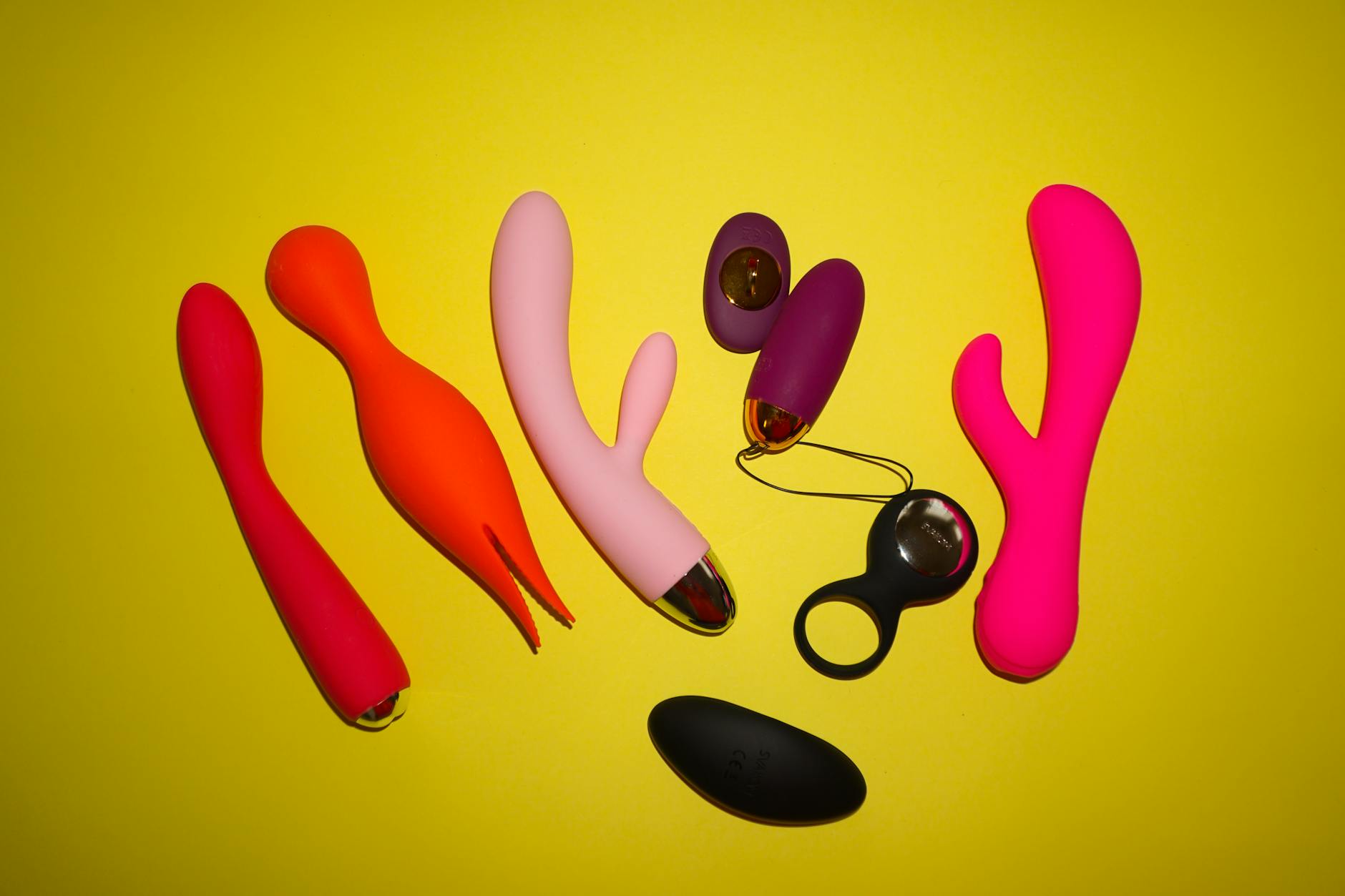
One of you is turned on by a feather touch. The other needs sustained, deep pressure. One wants to build slowly. The other wants to go fast and hard from the start. And suddenly what should be collaborative feels like a standoff, where one person is always either bored or overstimulated.
This is wildly common, and it's not a sign that something's wrong with your dynamic. It's just biology plus preference plus timing, which almost never aligns perfectly between two people. The good news: lemon vibrators are actually built for this exact problem. Not in a cute symbolic way. Literally.
First, let's talk about why this happens at all. Sensitivity varies for about a thousand reasons that have nothing to do with how much someone cares about you.
Some people have naturally higher nerve density in their clitoral tissue. Others have denser connective tissue underneath, which means the vibration has to be stronger to register. Hormonal cycles change sensitivity week to week. One partner might have gone through childbirth, medication changes, or age-related shifts that altered how sensation reads. Someone recovering from anxiety might need gentler touch to feel safe. Someone else might need intensity to quiet their anxious brain.
Then there's the arousal curve. People with vulvas typically take longer to build arousal than partners with penises, which can mean they're still in the warm-up phase when their partner is ready for something more direct. Or they've already climaxed and want to keep going while their partner needs recovery time.
None of this is fixable with communication alone. You need a tool that actually gives you both access to what works.
The Lemon clitoral vibrator and other lemon sexual toys come with multiple settings, but here's what actually matters: they're designed so each person can hold it and control the intensity independently.
That changes everything. Instead of one person saying "go faster" and the other person gritting their teeth, you're both holding the device or managing placement, which means you're both getting a say in real time. If your partner is holding the lemon vibrator against you, they can feel through their hand what pressure you're responding to. You can guide them. And if you're holding it on yourself while they touch you in other ways, you get to set your own pace entirely.
This is why penetration alone doesn't solve intensity problems. One person's pace is another person's pace. But a lemon sucker vibrator, which uses air-pulse suction instead of traditional vibration, lets you layer sensations. Your partner can provide slower, sustained touch while you control the intensity on the clitoris. Or vice versa.
Before you use lemon vibrators together, you need one conversation. Not about your feelings or your insecurities. Just logistics.
Ask directly: What intensity do you need to feel pleasure without it feeling like work? And here's the key part. You're asking about baseline, not about orgasm. Someone might say "I need moderate vibration to feel anything" or "Anything stronger than setting two makes me uncomfortable." Those are two different starting points, and you're not trying to make them the same.
Then ask: Do you want me to control the intensity, or do you want to control it yourself? This matters. Some people feel vulnerable handing over the remote. Others feel safer when their partner is running the show, because then they're not responsible if it's too much. Honor that.
Last: When do you typically feel most sensation? Morning, afternoon, after you've had time to warm up? This isn't a constraint. Just useful data.
Write these answers down if it helps. Make it practical, not emotional.
Pattern 1: Layered sensation. One partner uses the lemon clitoral vibrator at their preferred intensity while the other provides slower, sustained touch elsewhere. Hands on breasts, inside, kissing. The vibration is doing the intensity work. The hands are doing the intimacy work. Both are getting their needs met.
Pattern 2: Take turns controlling. Start with one person holding the device while the other manages the settings. Then switch. This teaches you both what different pressures feel like, and it keeps both of you actively engaged. You're not watching. You're participating.
Pattern 3: The hand-over technique. If one person loves deep intensity but the other doesn't, place the device against your partner's hand first. Your partner feels the vibration, but the transmission is softer because it's going through their hand instead of directly to sensitive tissue. Gradually reduce the buffer as arousal builds.
Pattern 4: Temperature and rhythm. Let the higher-intensity person use the lemon sucker or lemon vibrator at full settings while the lower-intensity person uses something gentler or uses their hands. This isn't about one vibrator. It's about both of you using what matches your body.
Here's where it gets real. If one partner consistently needs higher intensity and the other partner can't tolerate it, that's not a vibrator problem. That's a physiology or safety or desire problem.
Sometimes high intensity is a sign that someone's anxious or dissociated and needs the stimulation to break through. Sometimes it's just how their nervous system is wired. Sometimes they're not actually aroused and they're using intensity as a workaround. Those are three completely different issues with three different solutions.
If your partner seems to always be chasing a stronger sensation, ask: Does this feel good, or does it feel necessary? Big difference. If the answer is necessary, that's something to explore with a therapist or sex-positive counselor, not a vibrator issue.
If it's just preference, then you're back to the layered sensation approach. Different tools for different bodies.
You also need to know your own intensity needs independent of what your partner wants. Because a lot of people suppress their actual preferences to match a partner's intensity. That's where resentment grows.
So spend some time alone with a lemon vibrator. What intensity makes you feel pleasure without pushing through discomfort? What intensity makes your brain quiet down? What intensity is actually overwhelming versus challenging?
Don't aim for what you think you should want. Aim for what actually feels good in your body right now, on this day, in this cycle.
Write it down if it's helpful. Share it without apology.
Here's the thing nobody tells you: intensity needs change. Pregnancy changes them. Hormonal birth control changes them. Coming off medication changes them. Aging changes them. Major life stress changes them. That first conversation you had? It might be completely different in six months.
Build in check-ins. Not big therapeutic conversations every time. Just casual: Does this still feel right for you? Some people's needs shift monthly with their cycle. Others shift every few years. Both are fine. The tool that works now might need to be adjusted later.
That's where lemon sexual toys are built to last. Multiple settings mean you're not replacing them when your body changes. You're just changing the button you press.
Honestly, the biggest shift is relief. You stop framing intensity differences as a personal failure or a sign of incompatibility. It's just information about how your nervous systems work differently.
You also stop performing. The lower-intensity person stops pretending to want more. The higher-intensity person stops feeling ashamed of what they need. That's where real pleasure lives. Not in matching. In honesty.
When you both trust that your actual preferences will be honored, the whole dynamic softens. You're collaborating instead of compromising. And that changes everything.
No. The clitoris is tougher than it feels. Air-pulse suction vibrators like lemon vibrators are gentler than traditional vibration anyway because they're working with suction and release rather than buzz. That said, more intensity doesn't mean better. It means what your body needs right now. Overstimulation makes the clitoris numb, not damaged. The solution is turning it down, taking a break, or switching to a gentler lemon sexual toy.
That's a totally valid dynamic. Some people find that sexy. Others find it alienating. Talk about it first. If you're watching a partner use a lemon vibrator, your job isn't to judge or critique the intensity they choose. Your job is to admire them for knowing what they need. If that's hard for you, that's worth examining separately.
Nope. It's actually really common. Some people's brains are wired to need significant input to reach orgasm. That's not broken. It's just how you're built. A lem vibrator with multiple intensity levels means you can meet your own needs without apologizing. And if you're with a partner who finds that intimidating, that's a compatibility conversation, not a you problem.
The person who needs more intensity isn't being demanding. The person who needs less intensity isn't being withholding. Those stories destroy couples. The reality is simpler: different bodies, different needs. You're not negotiating a compromise where one person suffers. You're finding a system where both of you get what you need. That system might look like lemon vibrators, hands, fingers, different toys, or a combination. But the frame matters. You're collaborating, not competing.
Yes, and that's actually a smart approach for people who are new to vibrators or who have sensation sensitivity. Start with setting one on a lemon clitoral vibrator. Spend a few sessions there. Let your body acclimate. Arousal builds naturally over time, which often means you want more intensity later in the session. Let that evolution happen instead of forcing it. Some days you'll stay at setting two. Other days you'll use all of them. That variance is normal.
That's a sign to talk to a couples therapist, not a sign that you're incompatible. Intensity mismatch is one of the most solvable relationship issues because it's concrete and fixable. A lemon vibrator is actually one piece of the solution. But if it's creating bigger feelings of rejection, shame, or disconnection, you need support working through that. The tool isn't the whole answer.
Most couples I work with think intensity differences are a problem to solve. They're actually just information. Information about how your bodies work, what your nervous systems need, and what your real preferences are underneath the performance.
When you stop trying to want the same things and start letting each person have what actually feels good, something shifts. Sex becomes less about hitting a target and more about genuine pleasure. And that's where intimacy actually lives. Not in matching. In acceptance.