How to Use Lemon Vibrators When Your Partner Wants to Try One Together
The moment your partner suggests adding a toy to your sex life can spark anxiety, curiosity, or both. Here's how to make it feel collaborative, not threatening.
When your partner brings up the idea of using a vibrator together, something weird happens. Even if you've been wanting one yourself, you might suddenly feel defensive. "Does he think I need it?" Or worse: "Is this about what I'm not doing right?" Neither of those thoughts is true, but they feel real in the moment.
Here's what I've learned from working with couples: introducing a toy isn't about inadequacy. It's about curiosity. And that distinction changes everything.
Most of the time, a partner brings up trying a lemon vibrator together because they've noticed something. Maybe your orgasms feel distant. Maybe you seem less engaged. Maybe they just read something online and got curious. Rarely, if ever, is it because they want to replace themselves.
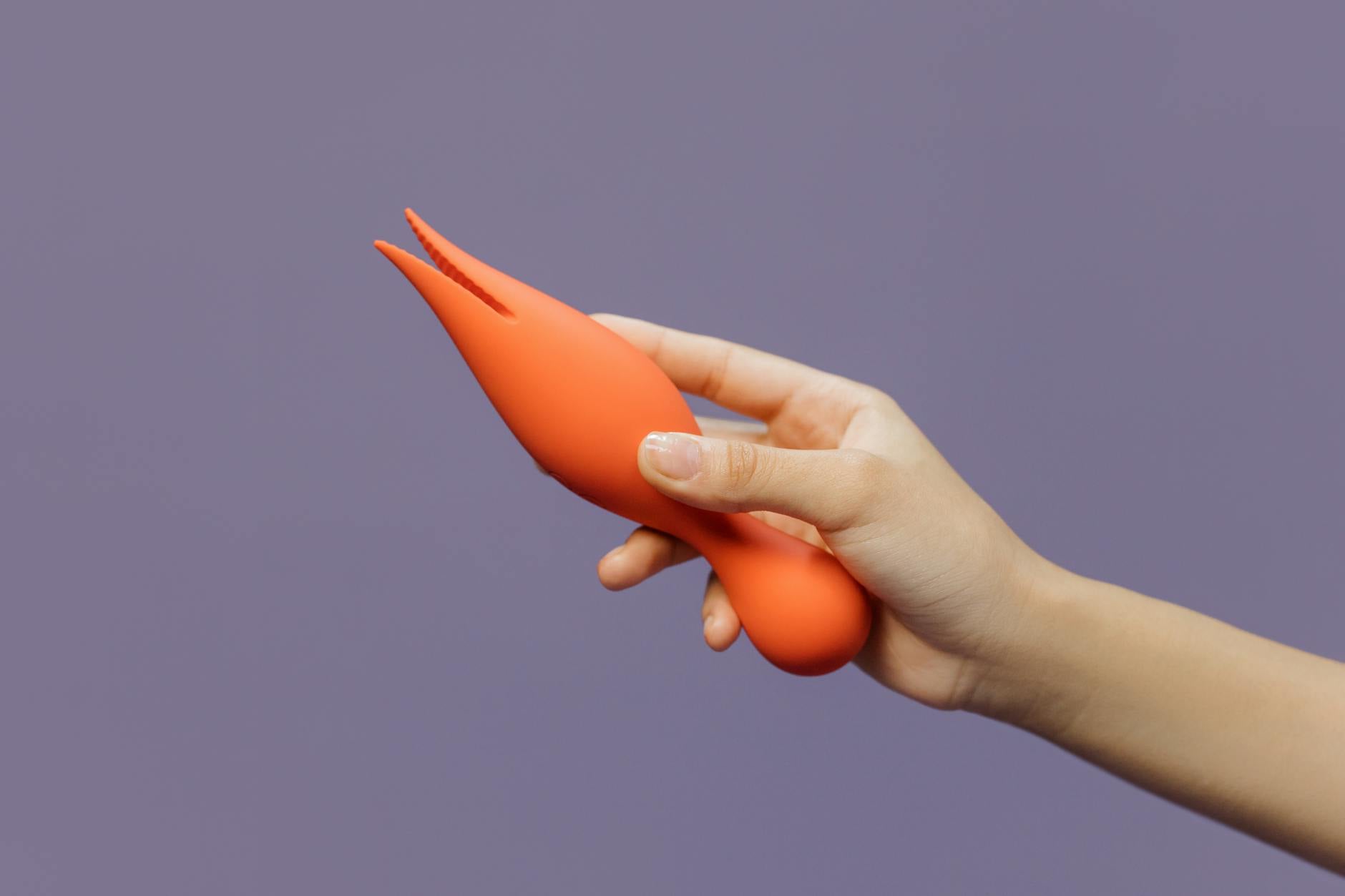
The suction-based design of clitoral vibrators like the Lem works differently than typical vibration. It stimulates nerves in a way that can unlock sensations you've never experienced, especially if traditional vibrators haven't worked for you. Your partner often picks up on this disconnect before you do.
Let's say your partner has just suggested trying a lemon vibrator together. What do you do?
Don't deflect. Don't say yes out of obligation. Do this instead:
Ask a real question. "What made you think about this?" Listen. Don't interrupt or defend yourself. Most partners are looking for permission to say something like, "I want you to feel amazing," or "I'm curious what it would be like." Those are good things. Hear them.
Be honest about your hesitation. If you have one, say it. "I'm a little nervous it means you're not satisfied" or "I worry it'll feel like you don't trust my body." Naming the anxiety takes its power away. Your partner can't reassure you if they don't know what you're actually afraid of.
Set a no-pressure boundary. "I want to try this, but I need to know there's zero expectation. If I hate it, we stop." That's not asking too much. That's clarity. Partners who care will respect it immediately.
Not all vibrators are equally suited to partnered play. Typical bullet vibrators can be jarring. They're designed for solo use. The Lem, by contrast, uses air-pulse suction technology. It feels less like a mechanical buzzing and more like a consistent, controlled sensation.
Why does this matter for couples? Because your partner can be involved without the experience feeling clinical or separate. They can hold it. Position it. Feel your responses and adjust in real time. It becomes part of the conversation between your bodies, not a replacement for it.
This is a critical distinction. You're not outsourcing pleasure. You're expanding what's possible.
You've had the conversation. You've bought the toy. Now what?
Start with no expectations about orgasm. This is exploration mode, not performance mode. The goal is to notice what happens, not to make something happen.
Use it during foreplay, not as the main event. Try it while you're being kissed or touched. The combination of sensations matters. Many people find that a lemon vibrator works best when it's part of a larger experience, not the only thing happening.
Let your partner watch. Vulnerability here goes both ways. If they can see your face, hear your breath change, feel your body respond, the experience becomes collaborative. You're not hiding the pleasure. You're sharing it.
Start at a lower intensity. The Lem has multiple settings for a reason. Begin at level 1 or 2, even if you think you're ready for more. Your body will tell you when to increase.
Something unexpected often happens the first time: pleasure. Real, surprising pleasure. And that can trigger shame. "I shouldn't need this." "What if I can only come with the toy now?" "Am I being selfish?"
These thoughts are normal. They're also not useful.
Here's the reframe: your body is not broken or wrong for responding well to different sensations. Neither are you needy. You're responsive. There's a difference. And a partner who loves you will see that as a gift, not a burden.
Often, one person in a couple is way more excited about toys than the other. That's fine. Not everyone moves at the same pace. If you're the less enthusiastic one, you don't have to suddenly become a toy evangelist. But showing genuine curiosity about what your partner finds appealing goes a long way.
Try this: ask your partner to show you exactly how they imagine using the toy. Not in a clinical way. In a "show me what you're picturing" way. Most of the time, couples realize they were both imagining the same thing anyway. The anticipation was scarier than the reality.
You might discover that you can orgasm more reliably, or more intensely. You might find that foreplay feels longer and more connected. You might realize your partner was right: you do like this. Or you might find it's not your thing, and that's okay too.
The point isn't that you have to keep using a lemon vibrator. The point is that you and your partner just communicated about pleasure in a direct way. You named what you wanted. You tried something together. You learned something about each other.
That is the opposite of pressure. That's intimacy.
Something worth knowing: toys don't have to be partnered to strengthen your relationship. How to Use Lemon Vibrators When You Feel Self-Conscious About Pleasure explores this more fully. But the short version is that knowing your own body better often makes sex with a partner feel better too. You know what works. You can communicate it. You're not relying on your partner to guess.
A lemon clitoral vibrator in solo sessions is still a form of connection. You're learning yourself. That knowledge moves into the bedroom with your partner anyway.
"Will I become dependent on the toy?" No. Your body doesn't forget how to respond to other touch. You're adding a tool, not replacing a skill. How to Use Lemon Vibrators When Pleasure Feels Inconsistent or Unpredictable breaks this down further, but the clinical reality is clear: more pathways to pleasure don't reduce other pathways.
"What if we try it and it kills the mood?" Possible. And also salvageable. Most couples laugh the first time a toy appears. That's not a disaster. That's bonding. Laugh, reset, try again next time.
"Will my partner think I'm weird?" They already know you're that kind of partner. The fact that they suggested a toy means they're already on that page.
After working with couples through this exact transition, I've noticed something consistent. The toy isn't what changes the relationship. The conversation does.
By suggesting a lemon vibrator together, your partner is saying: I see you. I want you to feel good. I'm brave enough to suggest something unconventional. I trust us enough to try. Those are foundational things. The toy is just the vehicle.
When you say yes (even tentatively), you're saying: I trust you. I'm willing to be vulnerable with you. I care about my own pleasure. I'm interested in what feels good. Those are also foundational.
That's the real shift. Everything else is just detail.
Both can happen. Try it his way first, then trade control. Most people find that handing over the toy to their partner at a certain point feels incredibly intimate. And then taking it back feels even better. There's no rule that says one approach is correct.
Yes, but it takes some positioning work. Most couples find it easier to incorporate a clitoral vibrator before or after penetration rather than during. The angles matter. If you want to try it during, go slow, communicate constantly, and prioritize comfort over aesthetics.
No. It's actually pretty common and builds a specific kind of trust. You're letting your partner see you in pleasure without filtering it. That's vulnerable and valuable. If it feels uncomfortable, say so. But it's worth trying at least once.
You ask him. Not accusingly. Genuinely. "I'm wondering if this is because you want more excitement, or because you've noticed something about what works for me." Listen to the answer. Most of the time, partners suggest toys because they want the person they love to feel amazing. That's the opposite of boredom.
Yes. Water-based lube makes everything feel better and protects both of you. It's not a sign that something's wrong. It's just practical. Have it nearby and use it freely.
No. Sex between two people almost never results in simultaneous orgasm, and that's fine. The goal isn't synchronized climax. It's connection and pleasure. If one of you comes and the other doesn't, that's just part of the experience. Keep going, pause, switch gears. There's no finish line.
Lemon vibrators aren't about fixing anything. They're about expanding what's possible between you and someone you trust. When your partner suggests trying one together, they're not criticizing you. They're inviting you into something new. And the fact that you're even reading this suggests you're already curious about saying yes.
That curiosity is the real starting point. Everything else follows from there.